- Home
- Practitioners
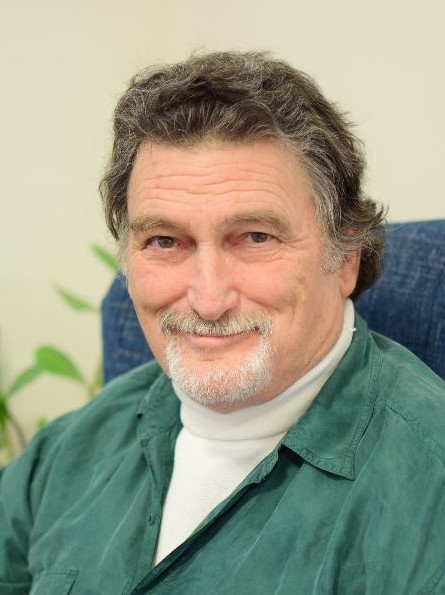
- Yehuda Tagar MIAPP (Life), Founder of Psychophonetics
Yehuda Tagar MIAPP (Life), Founder of Psychophonetics - The journey to my true vocation
The journey to my true vocation
The creation of Psychophonetics
There are two reasons for telling something about my personal journey towards the creation and development of Psychophonetics (previously called Philophonetics) as a modality of healing, personal development, coaching, education, and expression therapy:
- The method which has been my task to create is in effect a practical encouragement for people to take charge of their inner and outer lives, to take a step into coming-into being of their destiny, and in recreating individually the dignity, freedom, strength, love and wisdom inherent in every human soul.
- The story of its creation, even though only a small portion of it is told here, could be encouraging for creative people who believe in their potential gift and who carry it in stages when it is not fully formed and articulated- to trust in the fruit to come.
It has taken a lot of trust to carry an
impulse into fruition. It starts with the trust which my parents had in my
potential, the openness they gave me to unfold my imagination, adventurous
spirit and expression, leaving me free as well as supported. It continued by my
trust in the uniqueness of every human soul, myself included, to find an unique
expression to an unique experience. For me it began through poetry.
Poetry became for me the most demanding, intoxicating, adventurous process of
coming to terms with my inner experience, of articulating, understanding,
transforming and digesting experiences. Because expression became a powerful
way of unfolding potential and of healing my wounds, I grew to trust it in
everyone, to stand by it, to encourage it, to midwife it, even through hard
labour.
In my heart, I felt that truth is at the same time personal and universal, and
that the two are inwardly connected. Coming across the teachings of Rudolf
Steiner in my early youth was a philosophical, ethical and practical
substantiation to that knowing. He became a major teacher on this path,
although I never felt myself bound to the tradition established by others who
have taken up the ideas put forward by Steiner. His trust in the originality
and the fundamental goodness of the human soul encourages and supports me.
The inner working of the human soul are a wellspring of creativity, wisdom and
guidance. The oriental wisdom with its inner quiet; the most demanding ideals
born of the Christ impulse, the work of the great artists and poets of all
times were a great inspiration. The thinkers and practitioners such as Maslow,
Rogers, Perls, Assagioli, and Wilber, the founders and masters of Humanistic
and Transpersonal psychology of the second half of this century, became
comrades in the adventure of matching the wonders of the human soul with
understanding.
Later on, I discovered that prior to them all, a foundation was laid by Rudolf
Steiner, with a modern psychology that embraces the human spirit as well as the
body in Psychosophy, which became the foundation of Psychophonetics
counselling. However, I would not have come to appreciate its immense potential
for modern humanity if not for the study and training in Humanistic psychology.
The creation of Psychophonetics became an extension of my work with poetry, a
path of transformation, creation and healing that carried me throughout my life
since the age of 14: to cope with life, to grow and to heal through the
creative act of forging the name for the inner reality.
The act of shaping consciously the dynamics of the inner life through words,
movements, sculpting and sounds liberates us from their confines, while at the
same time creates a bridge of knowledge into the world. Poetry was an act of
bridging, breathing and broadening, and became a path of encouraging people to
name their own reality, to do their poetic deed.
In summary, three streams - the personal, spiritual, and artistic striving -
lead to the formation of Philophonetics/Psychophonetics as a methodology of
human experience:
- The striving towards self-knowledge, self-mastery of my soul forces, spiritual unfolding, and, more concretely, the desire to find a practical way of moving towards the fulfillment of the seven conditions of spiritual development, as the foundation of a path of development laid down by Rudolf Steiner in his founding work “How to know the higher worlds”.
- The practical striving to make sense of the approach to dramatic theatre as a path of awakening to the reality of human beingness. This possibility has ignited my enthusiasm and commitment as I encountered it in my late 20s at an Anthroposophical centre of adult education (Emerson College, Sussex, England). Yet in further exploration of what has evolved out of his indications in the circles of his followers, I had to realise that this vision was not evolving. As a frustrated but creative young man I had to embark on my own journey of exploration, experimentation and understanding this futuristic possibility.
A foundation for the future development of drama as a path of transformation and self-knowledge was laid by Steiner in his course of lectures called Speech and Drama in September 1924, together with the prediction that conditions at the time are not ripe for the development of this path, and a hope for future generation undertaking it when they are ready for it. I felt ready for it when I picked it up in London in 1984. It was clear to me then that what he put forward back then has not yet practically started. This journey led me to the discovery of Philophonetics/Psychophonetics.
- Having explored the development of humanistic, existential and transpersonal approaches to human development in my youth, alongside the study of Steiner’s Spiritual Science, I came to expect a synthesis between the obviously enlightened and liberating aspects of the new psychology and the spiritual context of such striving for freedom, as it was articulated by Steiner at the dawn of the 20th century. I could not find a path of Anthroposophic psychology, psychotherapy and counselling. I was recovering from a severe personal crisis in my late 20s, and I needed such a path for myself.
In Steiner’s foundation for an Anthroposophic psychology which he named Psychosophy, as well as in his critical writing about psychoanalysis, I found a starting point for the development of such a path. I found in Psychosophy, when taken in context of the rest of Steiner’s teaching, the most comprehensive, insightful and practical approach to the exploration of the human soul I have come across. I had to realise that, like his approach to theatre, it has hardly started. Psychophonetics counselling became my response to this challenge.
Exploration of the indications given in Psychosophy took place at the same time
as I was trying to make sense of Steiner’s approach to the development of the
actor. Drama research became the laboratory for the practical exploration of
Psychosophy, and Psychosophy became for me, the conceptual background, frame of
reference, and psychological language for my research in drama.
The ongoing attempts to integrate my soul life, to become an expression of my
spiritual being, enthused and motivated my research, constantly grounded it and
gave it living human reality. Together these streams converged and confluenced
in the formation of Philophonetics as a path of exploring human experience,
self knowledge and creation, and of Psychophonetics counselling as a path of
human transformation, healing and growth.
The motivation to do this work
I see in every human being a huge resource, mostly untapped, for the renewal of
the personal, spiritual, cultural and community life of our society. I see work
and the working place, family and relationships primarily as opportunities for
self fulfillment through interaction with others, which, if sustainable, is
beneficial for all.
For these opportunities to be realised, we must start from the renewal of ourselves. We are citizens of many worlds, and we possess inexhaustible sources of intuition, inspiration, imagination, heart, intelligence, love, compassion, interest and vitality. We equally possess resources for all the opposites. For every option we take - there are dozens we could have taken if we only knew of them, and we may very well take them the next time, when we are freer to choose. We must enter a practical, internal dialogue with our broader being, and most of it does not communicate in words.
Psychophonetics is a range of communication channels with our deeper resources, and consequently with the same dimensions of consciousness in others, and with the broader world of intelligence around and within us. It is a powerful tool for practical freedom, practical hope, practical love and for limitless renewal. This vision and this potential is my major motivation for my work.
Other aspects of my motivation consist of a range of personal needs: The need
to fulfill my own potential, to express my own creativity, to create new
possibility, to interact meaningfully with people, to create community, to live
a meaningful, exciting and rewarding life. Then there is the deep need to atone
and to heal personal imbalances and the toll they took on others in my near as
well in my far distant past. The need to heal my destiny and the destiny of my
interaction with others is a powerful motivation for my work.
I have made a life commitment to serve this impulse, to develop and complete its birth. This was and still is an expression of the trust in the promise of human potential, starting from my own and reaching to the community. It has been and still is a labour of love.
I feel compassion and deep sadness in the face of people world-wide whose potential has not yet found its true expression in their present work and whose deepest urges for fulfillment are therefore frustrated, mostly through no fault of their own.
I shall never forget their plight.
Psychophonetics counsellor/psychotherapist, supervisor & teacher at Skola Empatie Bernolákovo, SLOVAKIA Mob: 00421 948 849 933 Email Yehuda Websites: www.yehudatagar.com; www.psychophonetics.com Yehuda's YouTube channel: www.youtube/@yehudatagar |